Behavior on public roads (Test 1)
10 questions • Permit B+E, C+E and D+E (English)
Behavior on public roads
1
In general, conventional roads are...
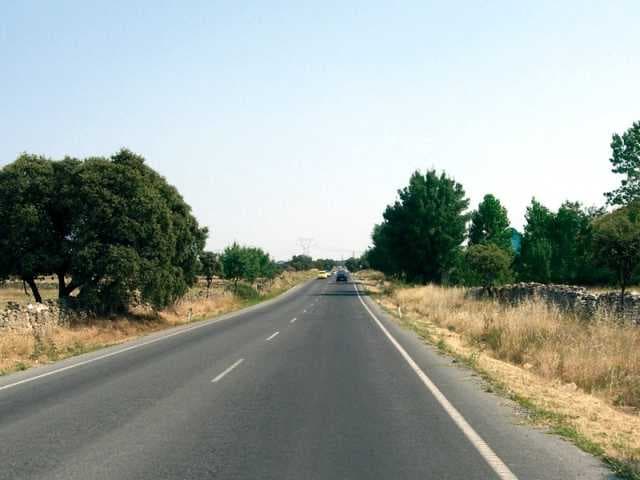
Behavior on public roads
2
If you are driving a combination of vehicles of large dimensions, must you slow down to make it easier for the vehicles following you to overtake?
Behavior on public roads
3
For safety, from which side is it advisable to get out of the tractor unit if, in an emergency, you had to stop your combination on the shoulder of a road?
Behavior on public roads
4
If you are driving a combination of vehicles with a total length of 12 meters on a dual carriageway outside built-up areas, what minimum distance must you keep from the vehicle ahead, which you do not intend to overtake?
Behavior on public roads
5
You are driving a combination of vehicles. As a professional driver, what effects do you think alcohol has on driving?
Behavior on public roads
6
On a roadway with several lanes, traffic is congested. If an articulated vehicle travels faster in the right-hand lane and overtakes the vehicles in the other lanes, is it driving correctly?
Behavior on public roads
7
On steep sections where, because of their narrowness, two vehicles traveling in opposite directions cannot pass each other, the vehicle traveling uphill has the right of way, but what is meant by steep sections?
Behavior on public roads
8
What does this sign indicate to you?
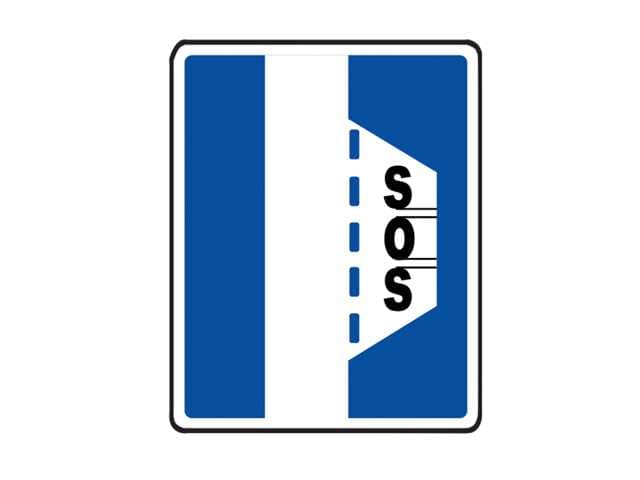
Behavior on public roads
9
If you are driving on a dual carriageway outside built-up areas in a vehicle towing an 11-meter-long trailer, what minimum distance must you keep from the vehicle ahead of you, which you do not intend to overtake?
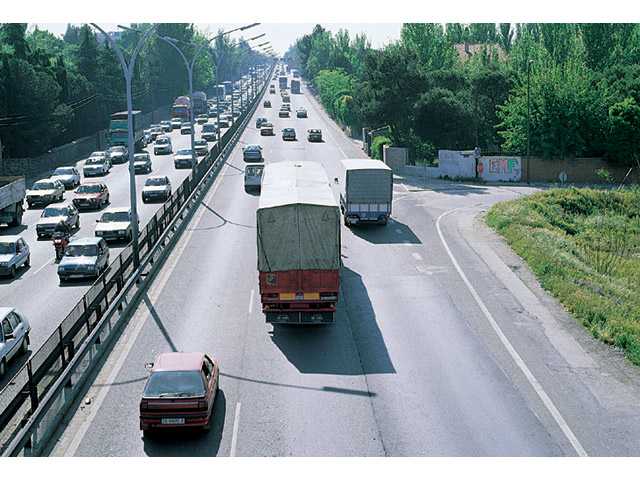
Behavior on public roads
10