Maneuvers and right of way (Test 10)
10 questions • Permit C and C1 (English)
Maneuvers and right of way
1
Upon noticing that another vehicle intends to merge into traffic, what must the driver's conduct be?
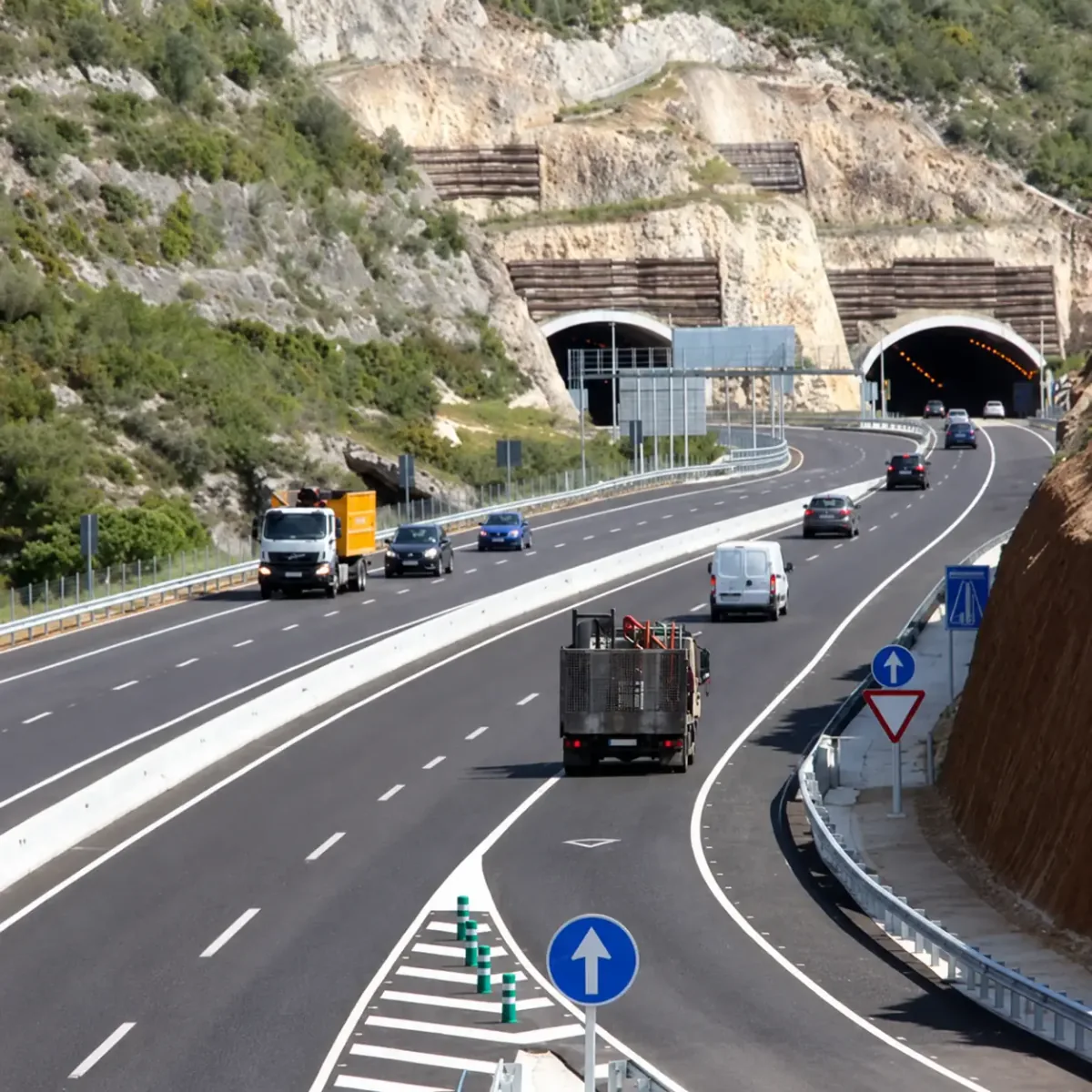
Maneuvers and right of way
2
When driving a truck with a maximum authorized mass (MAM) of 4,000 kg on a conventional road that has two lanes for the same direction, are you permitted to overtake a passenger car traveling at 80 km/h?
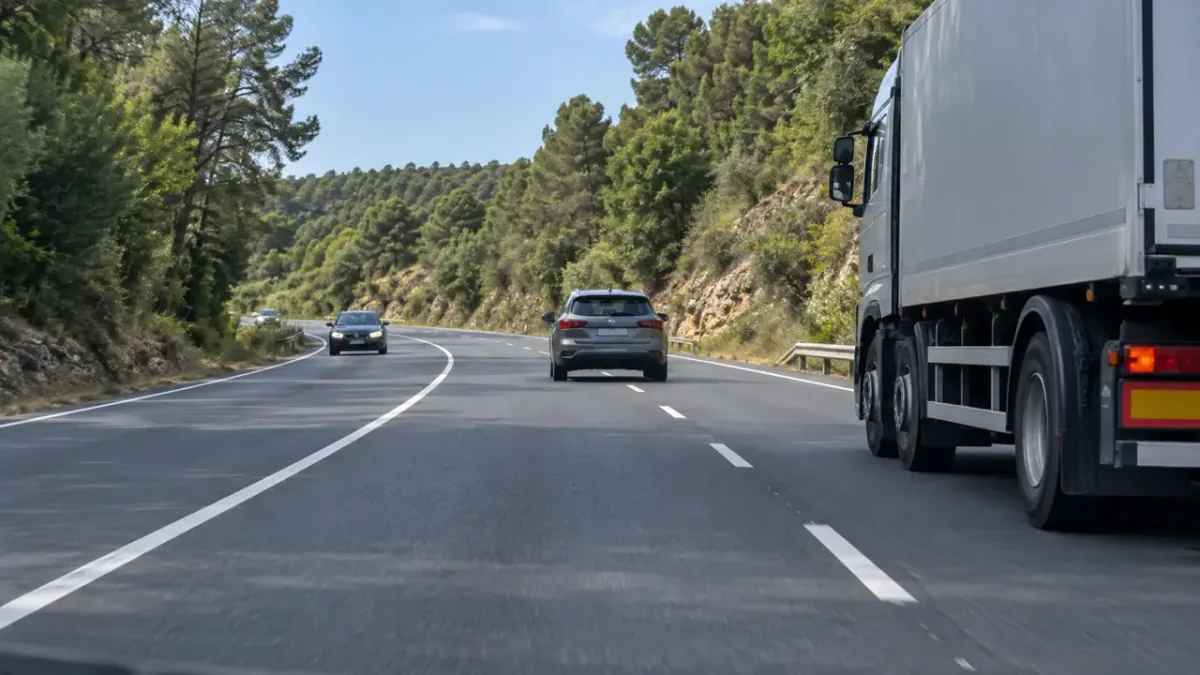
Maneuvers and right of way
3
When stopping or parking a truck with a maximum authorized mass (MAM) of 5,000 kg, in what circumstance is traffic considered to be seriously obstructed?
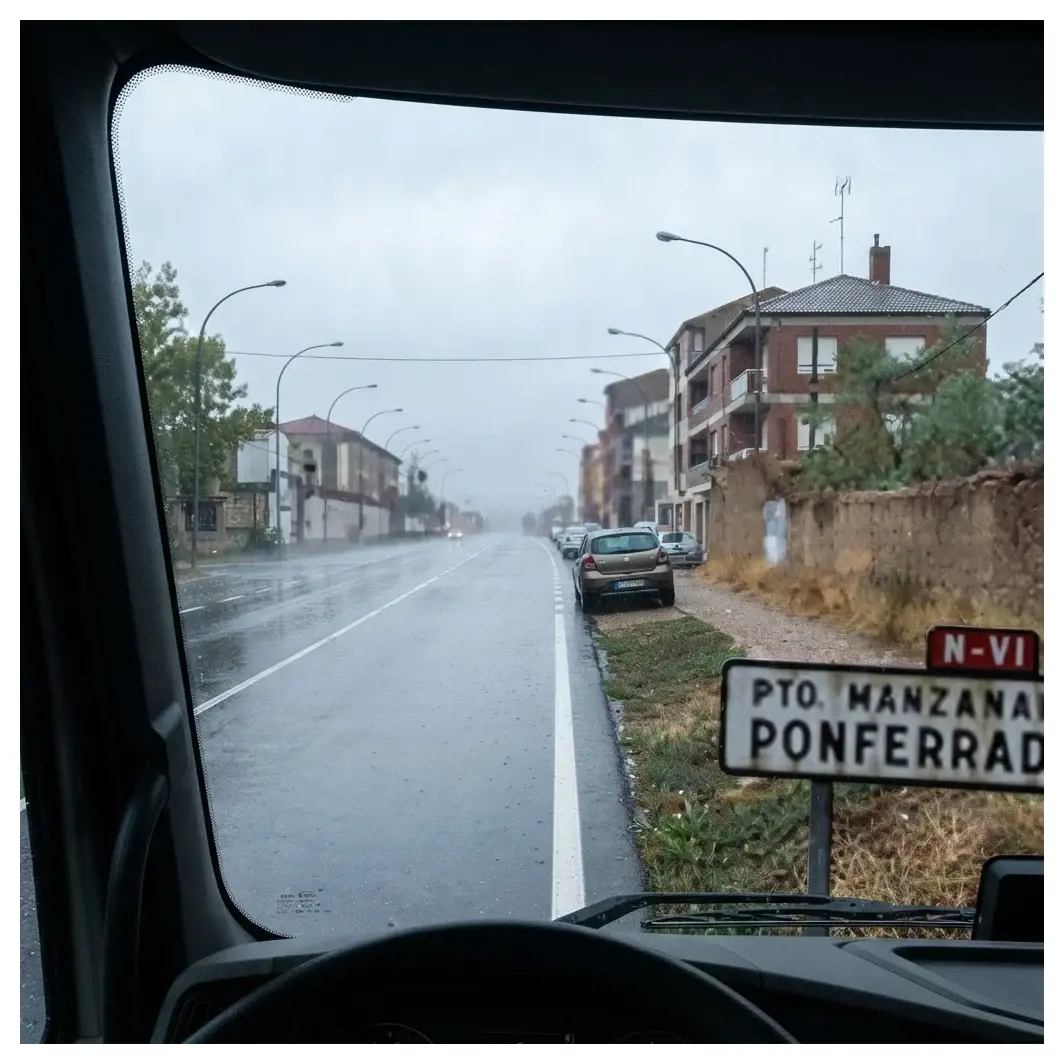
Maneuvers and right of way
4
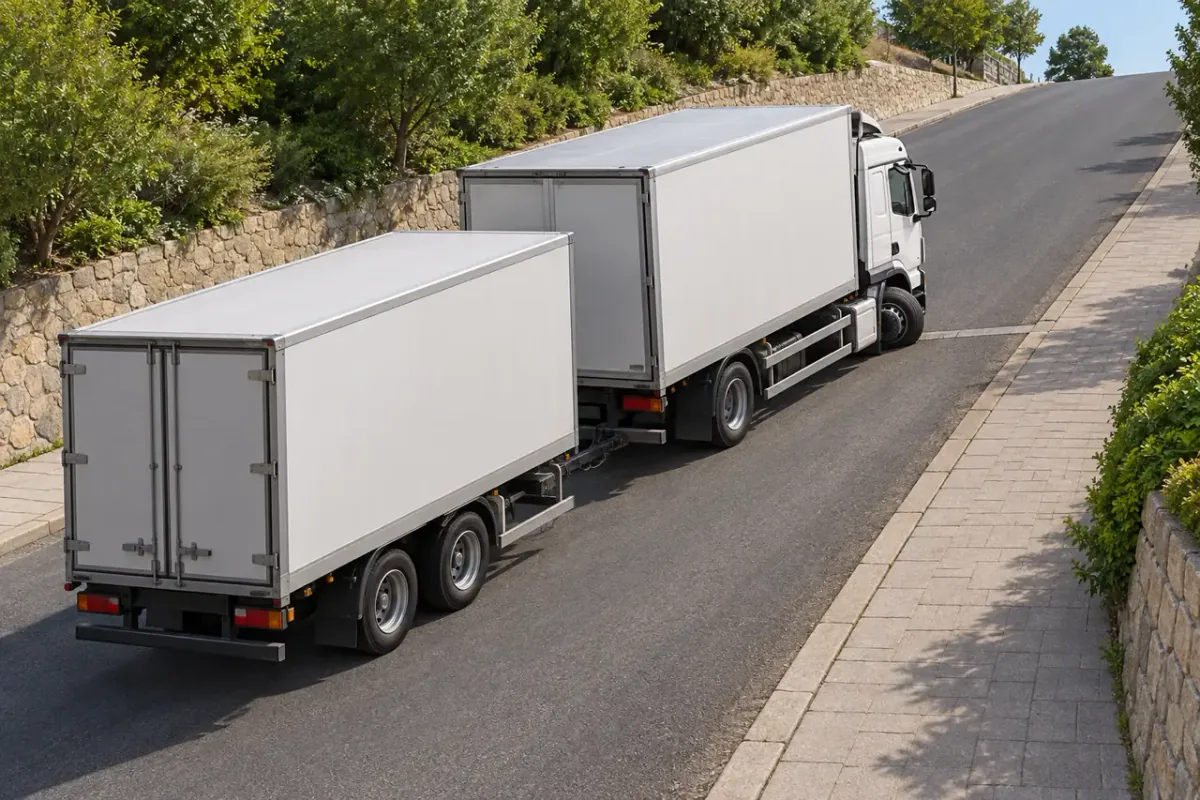
If you have to park a combined vehicle with a trailer on a road with an upward slope and you do not have chocks, how must you proceed?
Maneuvers and right of way
5
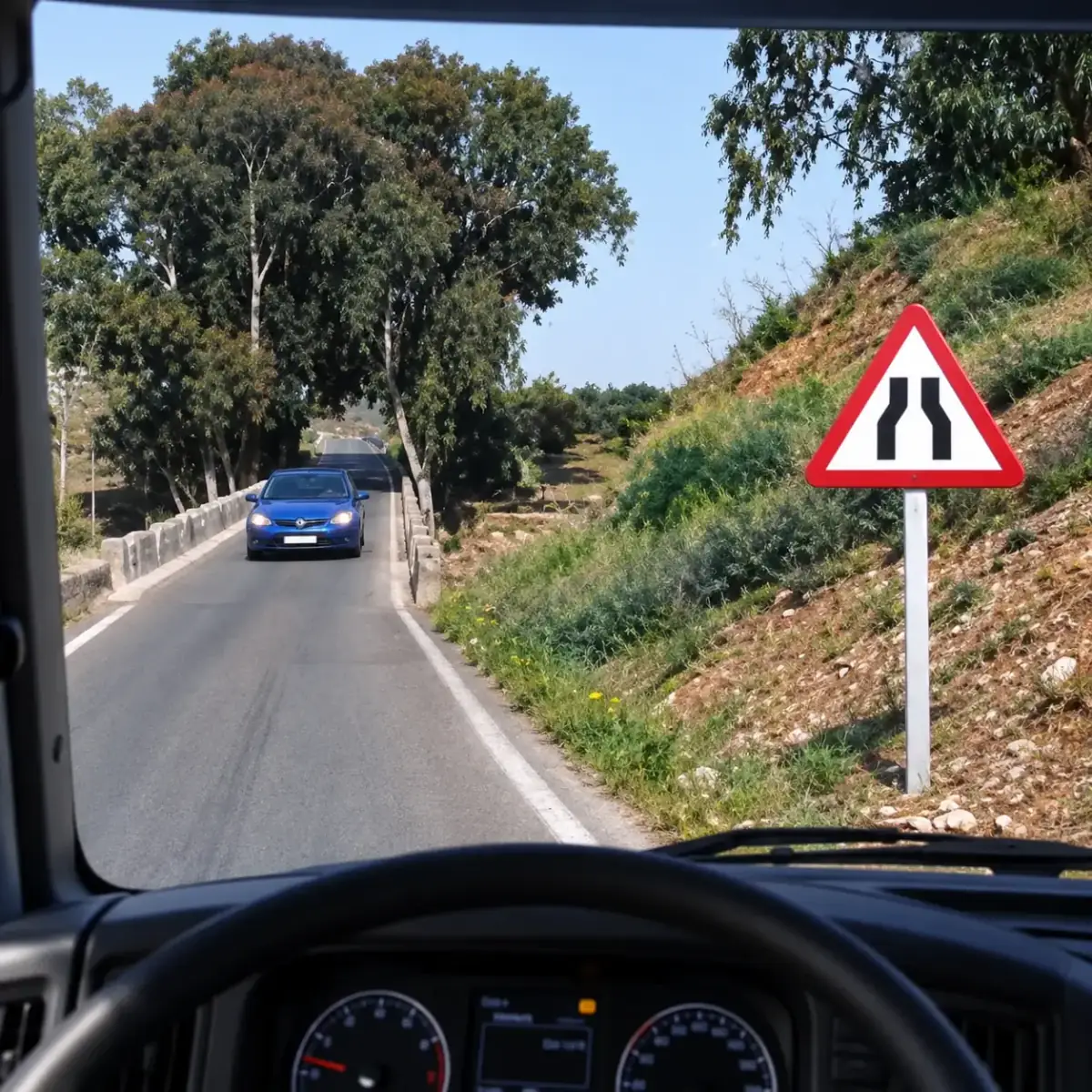
While driving a rigid truck, you reach an unmarked narrowing at the same time as a passenger car traveling in the opposite direction, and it is impossible for both to pass at once. Which vehicle is required to reverse to make way?
Maneuvers and right of way
6
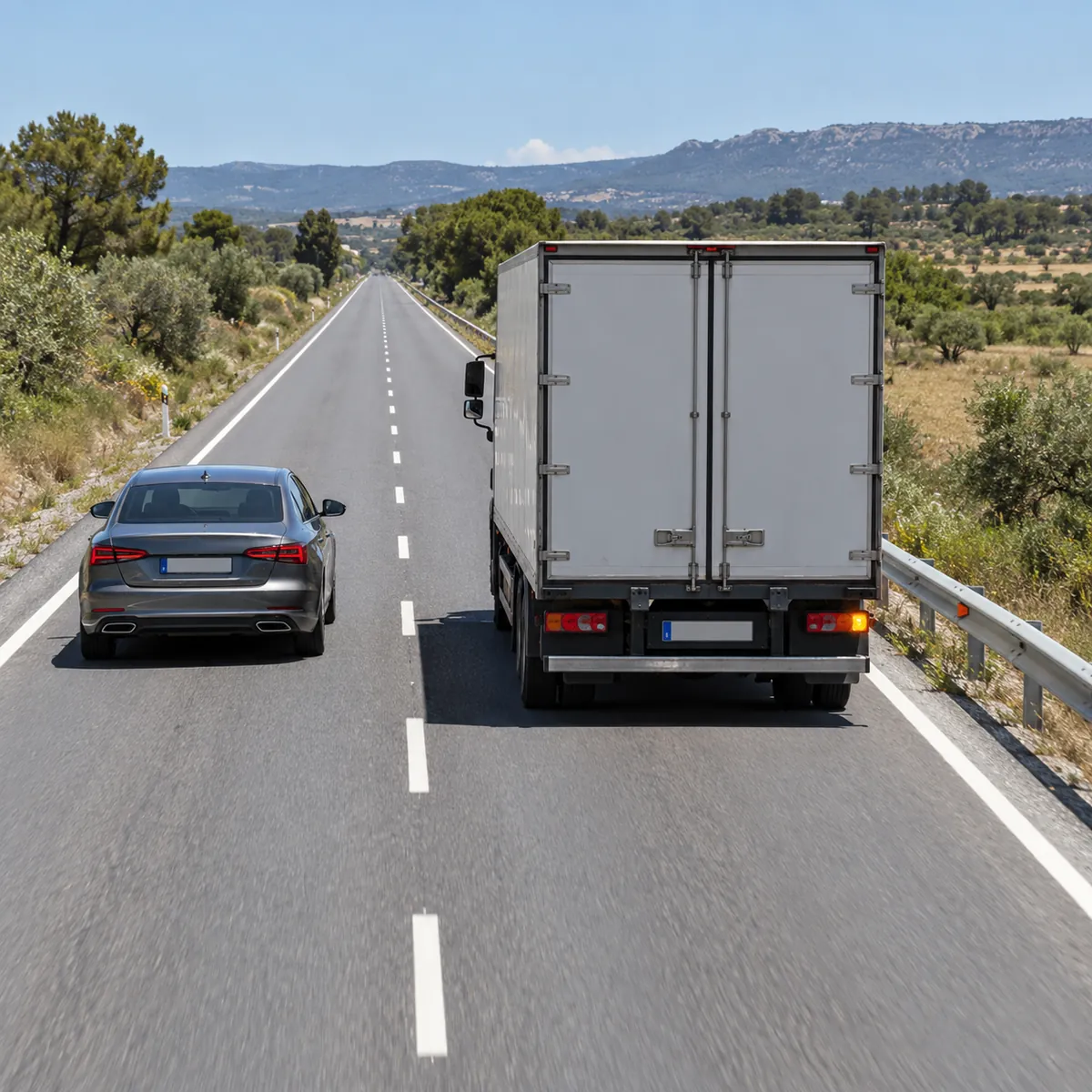
When driving a truck with a maximum authorized mass above 11,000 kg on a two-way road with one lane in each direction, if you notice that another vehicle intends to overtake you but you cannot move over to the right edge and the overtaking is safe, how must you act?
Maneuvers and right of way
7
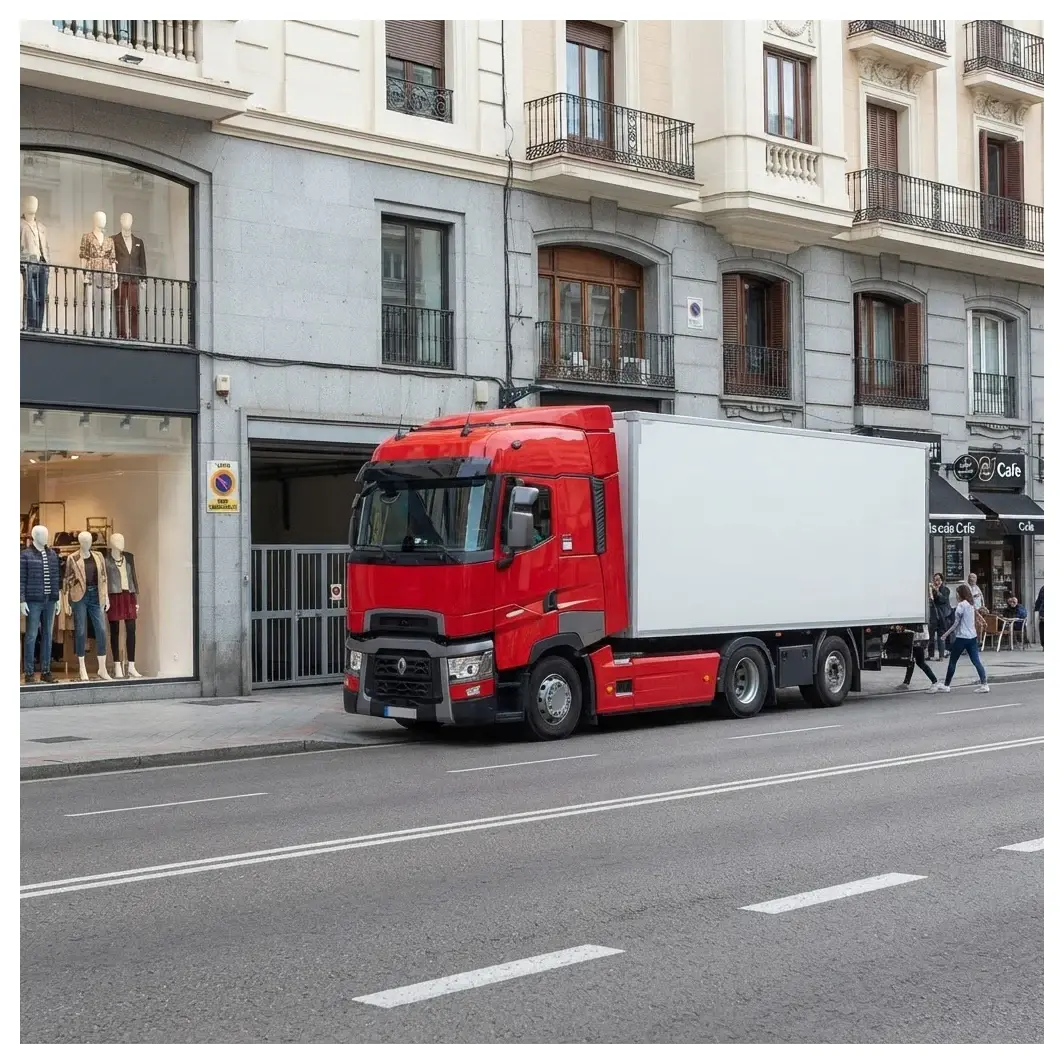
In which of the following situations is a stop considered a serious obstruction to traffic under the regulations?
Maneuvers and right of way
8
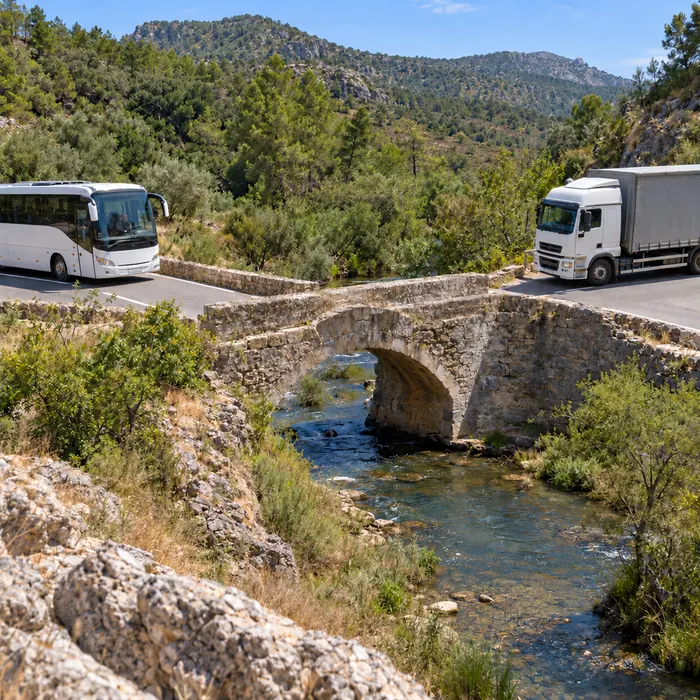
On an unmarked narrow section where priority has not been determined and a bus and a truck enter at the same time, which of them has right of way?
Maneuvers and right of way
9
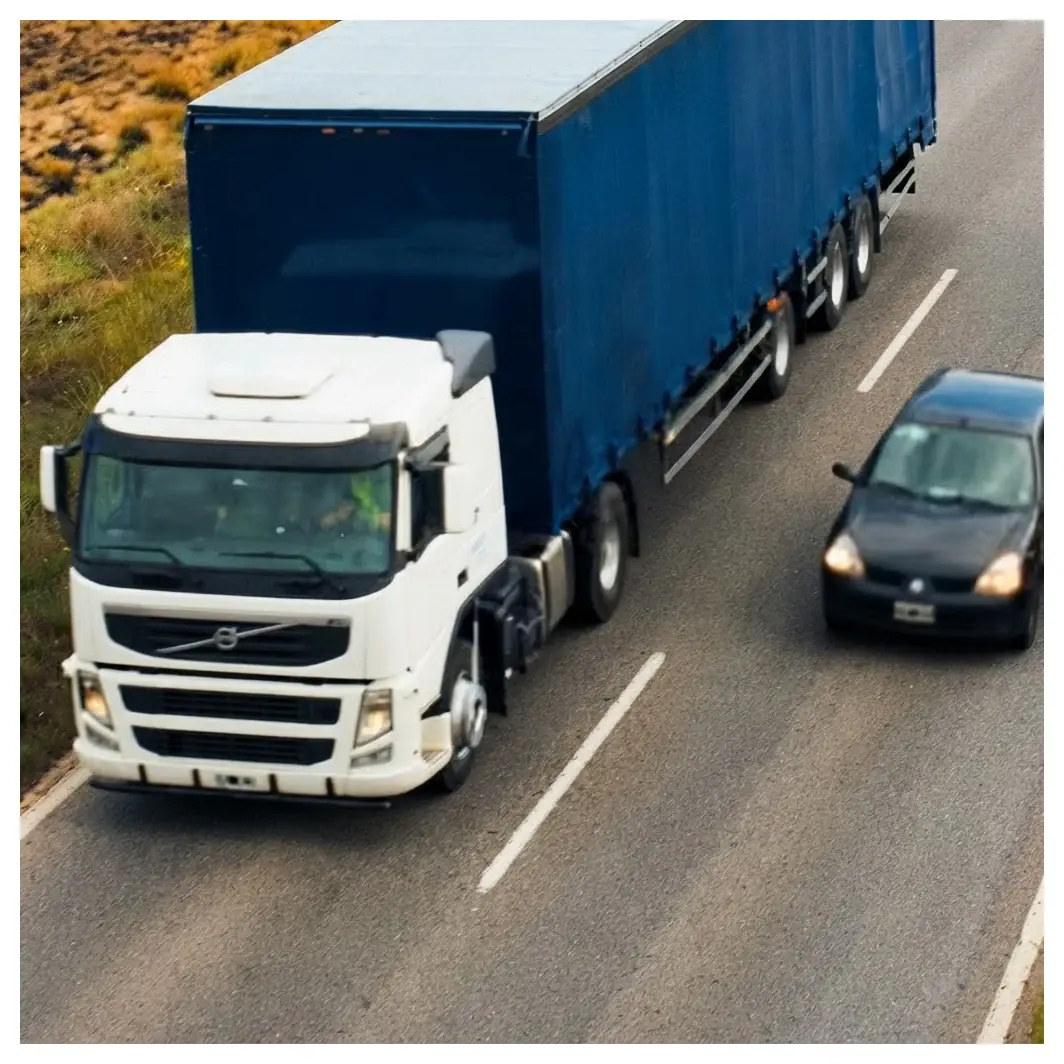
Before starting an overtaking maneuver, which aspects relating to speed must the driver assess?
Maneuvers and right of way
10
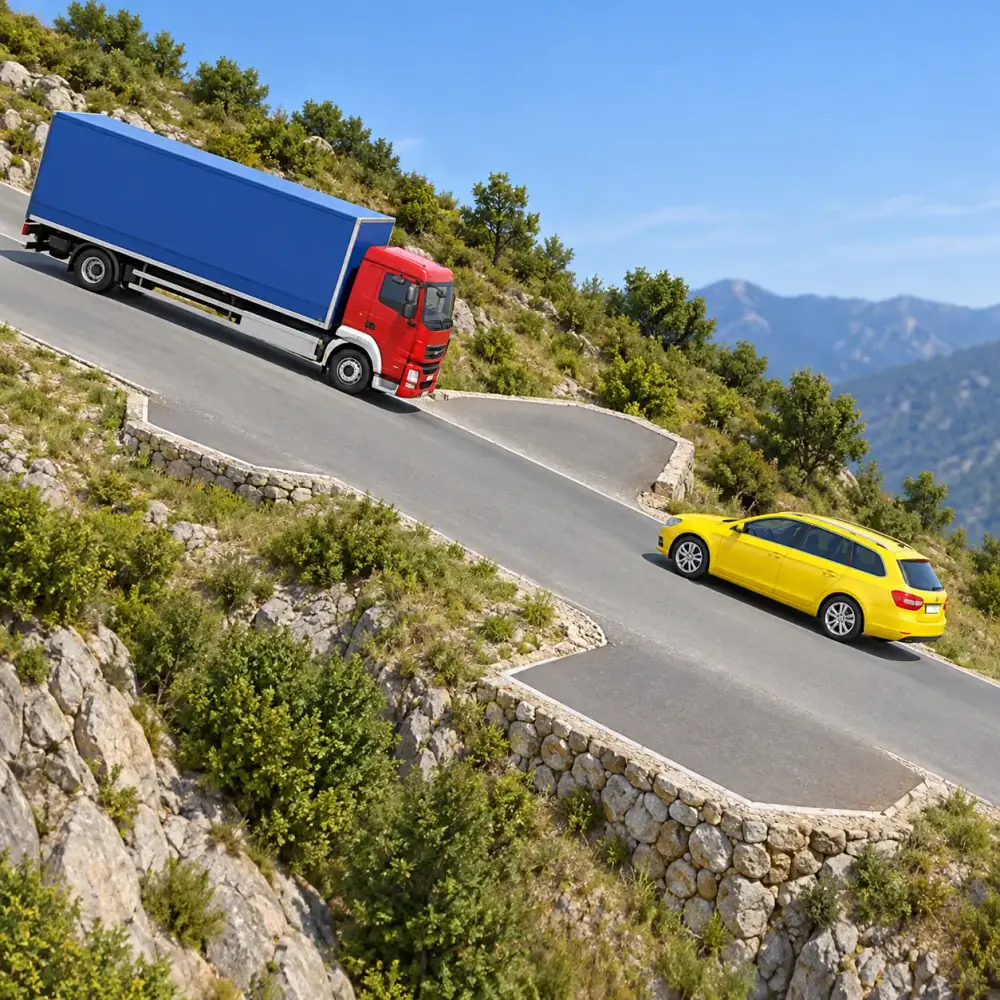
On a steep section with no possibility of passing each other, the situation shown in the image arises. The roadway has two passing places near the meeting point. Who will have right of way?