
Accidents and first aid
In this topic:
- Why accidents happen, who they affect most and what they cost everyone.
- What the law requires you to do if you are involved in an accident, if you see one or if you hear about one.
- How you protect the site: hazard lights, vest, connected V-16 warning light and where you wait, including in a tunnel.
- The PAS protocol (protect, alert, help) and how you assess an injured person: consciousness, breathing, recovery position and resuscitation.
- What you do and do not do for bleeding, fractures, burns and a motorcyclist wearing a helmet, and what compulsory insurance covers.
An accident is the worst moment to improvise. The minutes that follow decide whether someone else is run over, whether an injured person chokes or whether the ambulance arrives in time. That is why the law requires you to act and why the exam asks so much about the order: first you protect yourself and protect the site, then you alert, and only then do you help. In this topic you will also see the first care for an injured person. It does not make you a medical professional: it teaches you not to make things worse and to keep the person alive until help arrives.
1. Traffic accidents: why they happen and what they cost
1.1 The three factors
Three factors are involved in every accident: the human factor (the driver and the other road users), the vehicle and the road and its surroundings (layout, road surface, weather, visibility). They do not weigh the same: most accidents are due to the human factor, to the behavior of the person driving.
This leads to the most important idea: most accidents are predictable and avoidable. They are avoided by identifying and controlling risk factors in advance: speed, alcohol and drugs, fatigue, distractions and some illnesses. The premise is to always drive with maximum safety. Speed, moreover, makes everything worse: the higher the speed, the more serious the injuries can be.
1.2 Who they affect most and when
- Young people. Traffic accidents are one of the main causes of death and injury among young people in Spain. The main influence is a low perception of risk: inexperienced drivers perceive little danger and follow the rules less, and in a group showing-off behavior often appears. Between the ages of 15 and 16 the number of deaths rises because they start driving mopeds.
- Two-wheeled vehicles. This is where an accident is most likely to be fatal. In cyclists hit by a vehicle, the most serious injuries are usually to the head.
- Type of road. The largest number of deaths occurs on interurban roads. In built-up areas the accidents that cause the most victims are pedestrians being hit, and most of these collisions with pedestrians happen in cities.
- When. During the day they are concentrated at the times people go to and leave work, especially in the late afternoon. During the year, in vacation periods and on weekends. Accidents involving cyclists are more frequent in summer, because in good weather there are more bicycles on the road.
1.3 The consequences
Traffic accidents are a serious health and economic problem: one of the main causes of death and injury. Even so, people tend to underestimate how serious they are. Their costs are grouped as follows:
| Cost | What it includes |
|---|---|
| Human | Lives lost, years of life lost, reduced productive capacity and the physical and psychological suffering of the victims, their families and friends |
| Material | Damage to the vehicle, its load, the road and its surroundings and the environment |
| Health | First aid, medical treatment, rehabilitation and later adaptations |
| Administrative | Insurance management, court proceedings and public services |
The consequences affect the whole of society, and the economic costs end up being paid by all citizens, directly or indirectly.
2. What the law requires of you
2.1 Who is obliged
The Traffic Law and the General Traffic Regulations require all road users who are involved in an accident, witness it or know about it to:
- help or request help to care for the victims, if there are any;
- cooperate to avoid greater dangers or damage;
- restore, as far as possible, the safety of traffic;
- and cooperate to clarify the facts.
If you are not involved and you come across an accident, you must stop and help in whatever concerns you, unless your cooperation is clearly not necessary (help is already organized) or the authority or its officers are already at the scene. In those cases, keep going without stopping to look: onlookers get in the way of the rescue teams and cause new accidents.
Watch out in the exam: “do I have to stop?” almost always has the same answer: yes, unless help is already organized or the officers have arrived. If you are involved, you always stop.
2.2 If you are involved
Every user involved in an accident must, as far as possible:
- Stop in a way that does not create a new danger for traffic.
- Get an overall picture of what has happened, to establish an order of priorities: traffic safety, help for the victims, identifying yourself and cooperating with the officers. Do not rush: stay calm and decide before acting.
- Restore or maintain traffic safety.
- If there is apparently someone dead or seriously injured, or the officers have already been notified, not change the state of things or the marks or other evidence useful for determining responsibility, unless it is needed for the safety of the injured or of traffic.
- Give the injured the most appropriate help and request medical assistance.
- Notify the authority or its officers if there is apparently anyone injured or dead, and stay at or return to the scene until they arrive, unless they authorize you to leave, you have to help the injured or you need to be treated yourself.
- Give your identity to the other people involved if they ask for it. If there is only property damage and the affected person is not there (a parked car), get your name and address to them as soon as possible, directly or through the officers.
- Provide the vehicle details to the other people involved if they ask for them.
When you do not need to notify the officers. It is not mandatory to notify them or stay at the scene if all three conditions are met at the same time: there are only clearly minor injuries (or none), traffic safety has been restored and none of those involved requests it. If any of them asks, you must notify the officers even if nobody is injured. With deaths or injuries that are not clearly minor, always.
The joint accident report (the accident statement) must not be filled in on the platform of the road, that is, on the roadway or the shoulder. It is done in a safe place outside the road.
2.3 Failure to render assistance
The Criminal Code punishes anyone who does not help a person who is helpless and in obvious and serious danger when able to do so without risk to themselves or to third parties, and anyone who, unable to help, does not call for help urgently. It is a crime even if you are not involved in the accident. If you caused the accident yourself, the penalty is greater. And voluntarily leaving the scene after causing an accident with deaths or serious injuries is another crime, that of leaving the scene of the accident.
The law does not ask you to put yourself in danger: if helping involves a risk to you or to others, you comply by calling for help.
3. The PAS protocol
In an accident, the order is always the same and no step is skipped:
| Step | What you do | Why it goes in that order |
|---|---|---|
| P · Protect | First you protect yourself (self-protection) and then you protect the site to prevent new accidents: you signal and move the danger away | If you are hit, there is one more victim and nobody alerts or helps |
| A · Alert | You call 112 and give the details of the accident | Specialized help is what saves lives; the sooner it leaves, the better |
| S · Help | You care for the injured: first you assess them and then you act | Only with the site safe and help on its way |
Watch out in the exam: if you are asked what comes first, the answer is protect, and within protecting, protecting yourself. Neither calling the police, nor caring for the injured, nor organizing the emergency services comes before.
4. Protect: signaling and getting to safety
This section applies equally if your car has broken down, if you have had an accident or if you stop to help at someone else's.
4.1 The vehicle
- If the vehicle can keep going, keep going immediately, driving safely. If it needs an assistance service (tow truck), leave the lanes as soon as possible and go along the right shoulder to the first exit. If you cannot, stop on the right shoulder or where you get in the way least.
- If it cannot keep going and the vehicle or its load obstructs the roadway, signal it and do what is needed to remove it as soon as possible. If feasible, take it off the roadway and leave it as if you were parking it.
- Immobilize it: handbrake and ignition off (engine off). Do the same with the vehicles involved in the accident, to prevent them from moving or catching fire.
- If you stop to help, stop where you do not create a new danger, far from the accident and off the roadway if you can.
4.2 Signaling: lights, vest and V-16
The first thing, as soon as you have immobilized the vehicle, is to switch on the hazard lights (the four turn signals) and, when needed, the position lights. Then:
- Reflective vest. On interurban roads, the driver of a car who gets out of the vehicle and occupies the roadway or the shoulder must wear a high-visibility reflective vest. Put it on before getting out: it is advisable to keep it within reach, not in the trunk. The same applies to buses, trucks, vans, dual-purpose vehicles, combinations and, from 1 October 2026, motorcycles.
- V-16 warning light. Since 1 January 2026 the only valid hazard warning device is the connected V-16 warning light. It is an amber light that is placed on the highest possible part of the vehicle (normally the roof), so that it can be seen from far away. When switched on, it communicates its activation and the position of the vehicle to the national traffic access point (the DGT platform). The type of road does not matter: motorway, dual carriageway, two-way conventional road or one-way roadway; it always goes on the roof.
- Warning triangles are no longer valid. Previously, you had to get out and walk along the roadway or the shoulder to place them, at the risk of being hit. That is why the V-16 is safer: it is placed without walking on the roadway.
The V-16 does not replace the hazard lights: you use both.
Cars, and vans and dual-purpose vehicles of up to 3,500 kg, must carry in their mandatory equipment the V-16 and a reflective vest, as well as a spare wheel or an alternative system. The first-aid kit is not mandatory in a private car, but it is recommended: gloves, sterile dressings and gauze. A cervical collar is not recommended: fitting it wrongly can make a neck injury worse.
4.3 The occupants: where to wait
With the vehicle immobilized and unable to continue, as a general rule the occupants must get out if there is a safe place outside the platform (outside the roadway and the shoulder), for example behind the safety barrier. They get out on the side away from traffic and without walking or staying in the lanes or on the shoulder. If traffic conditions do not allow getting out safely, they stay inside with their seatbelts fastened.
On motorways and dual carriageways none of the occupants may walk on the roadway, under any circumstances. To call for help, use the telephone or the nearest SOS post, without walking on the roadway.
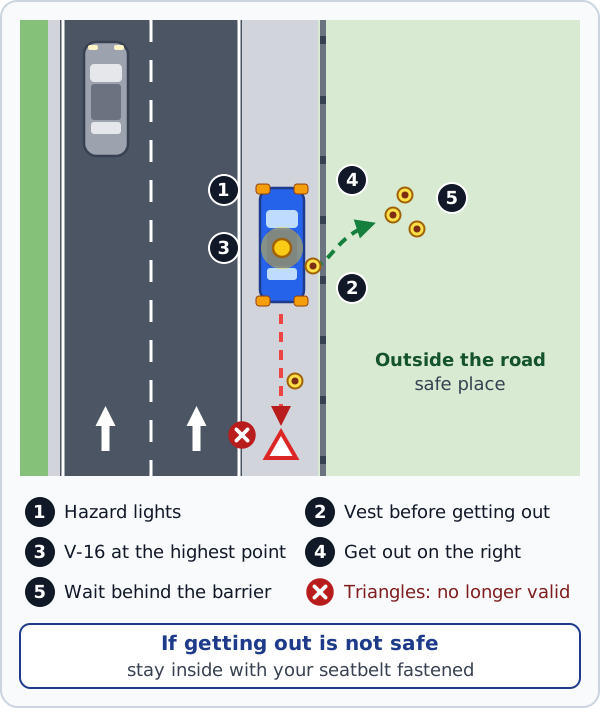
Figure 1. Hazard lights, vest before getting out and V-16 at the highest point; then everyone outside the road on the side away from traffic. Nobody walks on the roadway or the shoulder to place triangles.
4.4 Tunnels and underpasses
A tunnel is an enclosed space, with little room to move aside and where smoke builds up. If your vehicle is immobilized in a tunnel or underpass because of an emergency:
- Switch off the engine, switch on the hazard lights and leave the position lights on.
- If you can, take it to the nearest emergency area (lay-by) in your direction; if there is none, stop it as close as possible to the right edge.
- Place and activate the V-16.
- Call for help without delay from the nearest SOS post, if there is one, and follow the instructions you are given.
- You and the other occupants get out of the vehicle and go quickly to the nearest refuge or exit, never going on the roadway if there are areas closed to vehicles (sidewalks or walkways).
If the breakdown lets the vehicle keep moving, do not stop: continue to the exit of the tunnel or, if that is not possible, to an emergency area.
If there is a fire, pull the vehicle over as far as possible to the right, so as not to block the emergency vehicles, switch off the engine and leave the key in and the doors open: that way the firefighters can move it if it is in the way. Everyone gets out and moves away toward the nearest refuge or exit, away from the fire.
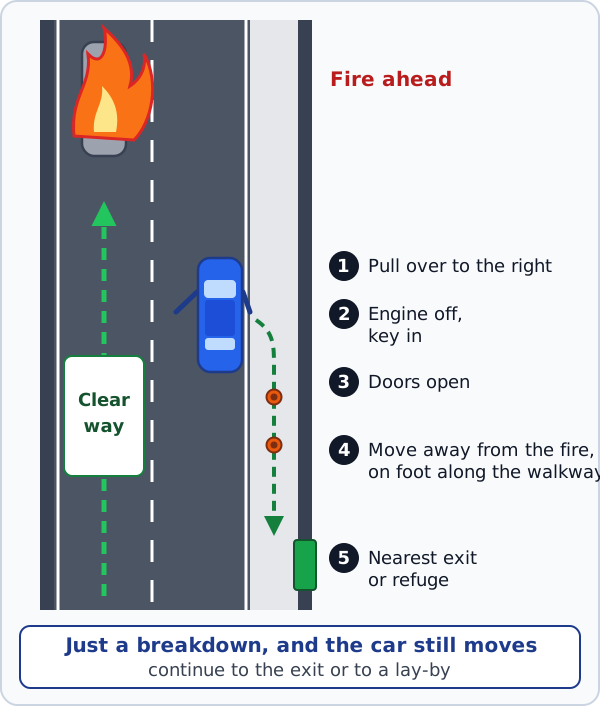
Figure 2. With a fire in the tunnel: to the right, engine off, key in, doors open and on foot toward the exit, moving away from the fire. Not to scale.
If you are stopped inside the tunnel because of the traffic itself (a tailback), it is not an emergency: do not get out of the vehicle, switch on the hazard lights temporarily to warn those behind, keep the position lights on, switch off the engine and leave as much distance as possible to the vehicle in front.
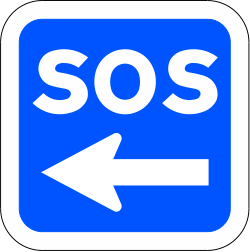
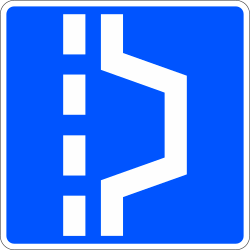
The signs help you find it: S-27 (roadside assistance: it indicates the nearest SOS post), S-34 (lay-by) and S-980 (emergency exit).
4.5 The intervention zone
When the emergency services arrive, at the scene of the accident the traffic authority or its officers (or the person in charge of the incident whom they designate) are in command: they decide which personnel and which equipment stay in the intervention zone and where the emergency vehicles are placed. The aim is to guarantee the best assistance to people. That is why:
- The most suitable and strictly necessary resources are used.
- The assistance services take up as little of the roadway as possible.
- The presence of people not involved in the assistance is avoided.
If everything is already organized, cooperate by following their instructions and, if they do not need you, leave.
5. Alert: 112
112 is the single emergency number throughout the European Union, and the one you must use as your first choice to call for help. When you call, give clear details:
- Where: the road, the kilometer marker or a landmark, and the direction of travel.
- What has happened: type of accident and vehicles involved.
- How many injured there are and how they are (whether they respond, whether they are breathing, whether they are bleeding, whether they are trapped).
- Added risks: fire, smoke, dangerous goods, vehicles in an unstable position.
- Who you are: identify yourself with your personal details (name and a contact phone number).
Do not hang up until you are told to: the operator might need more details or give you instructions.
6. Help: the general rules
6.1 Who and how
Life support techniques (opening the airway, resuscitation) are for specialized personnel. You must not apply them yourself unless you are completely sure that you know them and can do them. What anyone can do, and what helps most, is: protect, alert, assess the injured person, keep them in the best position, keep them warm and watch over them until help arrives.
6.2 Do not move the injured person
As a general rule, do not move the injured or take them out of the vehicle: wait for specialized help. A spinal injury that is handled wrongly can end in paralysis. An injured person is moved only when it is essential for their safety: an imminent danger (fire, risk of being hit) or a cardiorespiratory arrest, which requires laying them on their back on the ground for resuscitation.
If they have to be moved, they are moved as a block, with the head, neck and trunk aligned on the same axis, without bending or twisting them.
6.3 What to do and what not to do
| Do | Do not |
|---|---|
| Keep them warm always, in winter and in summer, to prevent them from losing heat | Give them anything to drink or eat, neither water nor alcohol |
| Loosen any clothing that is tight around the neck or makes breathing difficult | Give them medicines: neither tranquilizers, nor painkillers, nor stimulants |
| Protect their neck from sudden movements; without a collar, hold the head and neck with your hands and forearms | Put pillows or other objects under their head |
| Talk to them and reassure them, even if they seem not to hear you | Take them out of the vehicle until specialized help arrives |
| Watch their breathing until help arrives | Plug a bleed from the nose or ear |
6.4 The motorcyclist's helmet
As a general rule, the helmet is not removed from an injured motorcyclist: removing it the wrong way can make injuries to the head, neck or spine worse. It is removed only if it prevents breathing or it is essential in order to attend to breathing, and only if the right technique is known.
Watch out in the exam: “taking off the helmet to check the pulse” or “because they are more comfortable” are false answers. The only exception is breathing.
6.5 Taking an injured person in your car
It is exceptional: only when the situation is very serious and there is no other means, because the ambulance cannot arrive or will take too long and the injured person's life depends on it (one bank question accepts taking an injured person with a tourniquet if assistance will take more than 30 minutes: it is an example, not a deadline in the rules).
- If 112 says it is essential to take them and you can choose, use a large vehicle (a large van or a truck) that allows you to carry them lying down, with the head, neck and trunk aligned, and in the position best suited to their condition, not a car however fast it is. Do not put them on their side as a routine if they have suffered a blow.
- Immobilize the head-trunk axis.
- You must obey the traffic rules in every case, especially at intersections: you are not a priority vehicle. So that others notice the situation, use the horn intermittently and the hazard lights, or wave a handkerchief. The officers can ask you to justify the urgency.
Watch out in the exam: if you are asked which vehicle you choose for an urgent transfer without an ambulance, the answer is a truck or a large van, which allows the injured person to be carried lying down and in the position best suited to their condition. Not the fastest one, nor a car “because it is more comfortable”.
7. Assessing the injured person and keeping them alive
7.1 The order of the assessment
Before doing anything to an injured person, assess their condition to know how serious it is. The first thing you find out is whether they are conscious:
- Do they respond? Speak to them in a loud, clear voice. If they do not answer, do not shake them, because they could have a neck injury: the DGT first aid manual teaches a controlled painful stimulus, such as a pinch on the back of the hand. If they respond, they are conscious: do not move them, keep them warm, watch over them and do not give them anything to drink. If they do not respond, call 112 with the phone's speaker activated: the operator guides you through the next steps.
- Keep the airway open. In an unconscious person the tongue falls backward and blocks the throat. If they have not suffered a blow, with the injured person on their back, lift the chin upward (tilting the head back with your other hand on the forehead) and remove any debris you see in the mouth. If they have suffered a blow, avoid moving their neck and follow the instructions of 112; if you are trained, use the jaw thrust.
- Are they breathing normally? Look to see if the chest moves, listen and feel the air on your cheek. Do not spend more than 10 seconds checking. If they only give occasional, slow or noisy gasps, they are not breathing: treat it as a cardiorespiratory arrest. If they do not respond and are not breathing normally, start resuscitation with the help of 112: do not delay it by looking for a pulse.
Also notice how they breathe. Noisy or very labored breathing usually indicates that the airways are partially obstructed. Shallow, irregular breathing with long pauses makes you suspect brain damage. Watch it: if it turns into occasional gasps, start resuscitation.
Watch out in the exam: the first check for an unconscious injured person is whether they are breathing normally, and the maximum time to check is 10 seconds, not 30 or 45. Looking for the pulse is not part of a first aider's assessment: it is difficult to feel reliably and it would delay resuscitation.
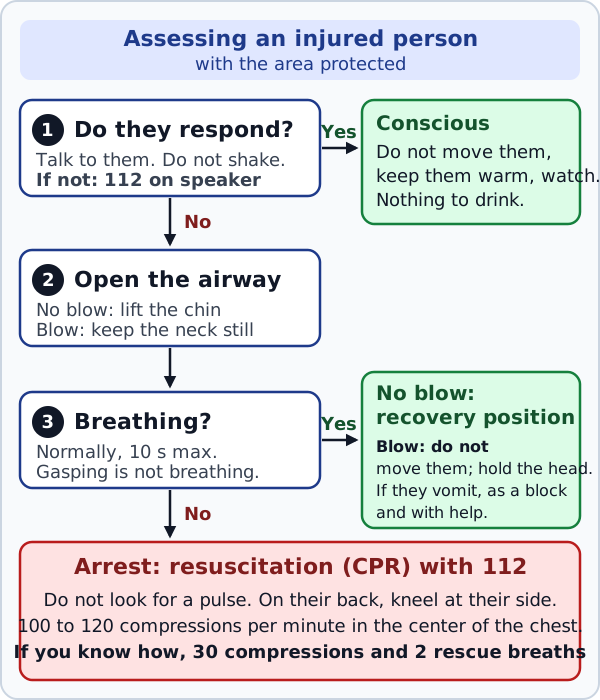
Figure 3. Consciousness, airway and breathing, in that order. If they do not respond, call 112 now. Each answer leads you to a different action.
7.2 Unconscious and breathing normally
First, have they suffered a blow? In a traffic accident there almost always is one, and turning them can damage the spine. If they have suffered a blow and are breathing normally, avoid moving them and hold their head so that the neck does not turn. If they are on their back, keep them that way and watch their breathing (European Resuscitation Council, 2025). If they vomit and you need to turn them so that they do not choke, ask for help: turn them onto their side as a block, keeping the head, neck and trunk aligned. Follow the instructions of 112. This is what the DGT manual calls placing them in the recovery position “with extreme care”, with the neck immobilized.
Without a blow: recovery position. A person who is unconscious and breathing normally and has not suffered a blow (a faint, dizziness) is placed in the recovery position, which in the exam is also called the defense position or lateral position: lying on their side, with the head turned to the side and the mouth toward the ground (some questions describe it as “half lying on the stomach with the head turned to the side”). That way the tongue does not fall backward and, if they vomit, the vomit comes out instead of going into the lungs. It is the position to prevent obstruction of the airways. Afterward, check that they keep breathing. That person is not left face down or half-sitting.
Watch out in the exam: if you are asked what the recovery or defense position is for, the answer is to prevent obstruction of the airways. That does not make it the position for every accident victim: after a blow, the rule is do not move them, and they are turned only as a block, with help, if they vomit.
7.3 Not breathing: cardiopulmonary resuscitation
If they are not breathing, they are in cardiorespiratory arrest and cardiopulmonary resuscitation (CPR) must be applied immediately. Make sure 112 has already been called (the operator can guide you by phone) and:
- Cardiac massage (chest compressions). With the injured person on their back on a hard surface, kneel at their side. Place the heel of one hand on the center of the chest and the other on top, with your arms straight, and press hard, letting the chest rise again. Push the chest down 5 or 6 cm. Rate: between 100 and 120 compressions per minute (the exam says “about 100”).
- Artificial respiration. If you know how and are able to give rescue breaths, alternate 30 compressions and 2 rescue breaths: with the airway open, pinch their nose and give mouth-to-mouth. If not, do compressions only, without stopping, and follow the instructions of 112. For a baby, give mouth-to-mouth-and-nose: your mouth covers both their mouth and their nose at the same time.
- If mouth-to-mouth is not possible or is not effective, do not stop: keep going with resuscitation, with the compressions, until help arrives or the injured person recovers.
Each rescue breath lasts about 1 second, just enough for the chest to rise, and the pause in compressions to give the two must not exceed 10 seconds. If the chest does not rise, do not keep trying: after two attempts, go back to compressions.
Watch out in the exam: the rate of the cardiac massage, “about 100 per minute”, is within the range of 100 to 120. The pause for the two rescue breaths is 10 seconds at most, not 12-13. And if you are asked about rescue breaths per minute in ventilatory support for an adult, they are about 10, one every 6 seconds: it is the technique of medical professionals with an injured person who has a pulse but is not breathing, not the resuscitation of a first aider, which follows 30:2 or compressions only.
8. Bleeding
8.1 External bleeding
The blood comes out through a wound. The most effective and lowest-risk action, and the first, is direct pressure on the wound, with your hand protected by a glove if possible (and gauze or a dressing). If the injuries allow it, you may keep the injured limb raised (the arm or the leg), but what stops the bleeding is the pressure.
The tourniquet is not the first measure. If bleeding from an arm or a leg is life-threatening and is not controlled by direct pressure, use a commercial tourniquet if you know how, following the instructions of 112, and do not delay it: the guidelines (European Resuscitation Council, 2025) call for applying it as soon as possible in that case. Note the time and do not loosen it: it must be removed by medical personnel.
8.2 Bleeding from the ear or nose
An injured person who bleeds from the ear or nose after a blow is considered seriously injured and is treated with caution: they could have a head injury. The flow of blood is never plugged. If it is the ear, cover it without pressing, with sterile gauze.
8.3 Internal bleeding
The blood cannot be seen, but the injured person is very pale and cold. If you see them like this, suspect internal bleeding: tell 112 about it, keep them lying down, keep them warm, do not give them anything to drink and watch over them. If they vomit, prevent them from choking: if they have suffered a blow and you need to turn them, ask for help and do it as a block, with the head, neck and trunk aligned. Follow the instructions of 112.
9. Fractures, spinal injuries and burns
9.1 Fractures
The most significant sign of a fracture is deformity of the area; it is usually accompanied by pain. The femur is one of the bones most often broken in traffic accidents. The types you must know:
| Type | What it is |
|---|---|
| Closed | The bone breaks but the skin stays intact, with no wound |
| Open | The broken bone breaks the skin and there is a wound, with a risk of infection |
| Complicated | The broken bone damages nearby vessels, nerves or organs |
“Polytraumatic fracture” is not a type of fracture: a polytrauma patient is an injured person with several injuries.
Do not try to set the bone. Immobilize the area as it is and wait for help.
9.2 Spine, neck and whiplash
An injured person with paralysis and no feeling in the legs probably has a spinal cord injury. If you suspect a spinal fracture, prevent them from sitting up or moving and protect their neck.
Whiplash (typical of rear-end collisions) causes muscle and head pain, reduced neck mobility, vertigo and dizziness. A properly adjusted headrest prevents it.
9.3 Burns
- If the clothing is on fire, put out the flames with a blanket, which smothers them, not with a plastic item.
- Cool the burn with cold water and keep the burned area raised (a hand, an arm).
- Do not remove clothing stuck to the burned skin, under any circumstances.
- Do not prick blisters or apply ointments.
- In serious and extensive burns, cover the wounds, if possible, with clean, wet cloths or dressings. Do not give them painkillers.
10. Compulsory insurance
Every motor vehicle must have compulsory third-party liability insurance (“compulsory insurance”). It covers damage caused to third parties, personal and material, up to the limits set by law (70 million euros per accident for damage to people and 15 million for property damage).
| Who suffers the damage | Does the compulsory insurance of the vehicle at fault cover it? |
|---|---|
| The other driver, who did not cause the accident | Yes, their personal and material damage |
| The occupants of the vehicle at fault | Yes, they are third parties |
| Pedestrians and other victims | Yes |
| The driver at fault, in their own person | No, under no circumstances |
| The vehicle at fault, what it carries and the property of its policyholder, insured person, owner or driver (and of their close relatives) | No |
It covers the third party even if the driver is not the policyholder (a son who drives his mother's car). If the vehicle that caused the accident had been stolen, the insurer does not pay: the victims are compensated by the Insurance Compensation Consortium. To cover your own damage you need voluntary insurance (own-damage or driver accident insurance).
What has changed in the rules
- 1 October 2026 (Royal Decree 518/2026). Motorcycles also carry a vest in their equipment, and their rider puts it on when getting out on the roadway or the shoulder of an interurban road, like the driver of a car.
- 1 January 2026 (Royal Decree 159/2021). The connected V-16 warning light is the only valid hazard warning device. Triangles are no longer valid: previously, one was placed in front of and another behind the vehicle, at least 50 meters away and visible from 100 meters (only one, behind, on one-way roadways or those with more than three lanes). Between July 2021 and December 2025 triangles and the V-16 warning light coexisted.
- 1 July 2021 (Royal Decree 159/2021). The occupants of an immobilized vehicle get out on the side away from traffic and wait outside the platform, or inside with their seatbelts fastened if getting out is not safe; filling in the report on the platform is prohibited; the V-16 is placed on the highest part of the vehicle.
If a question accepts triangles or placing them at 50 meters as valid, it dates from before 2026.
Numbers you need to know
| What | Number | Nuance |
|---|---|---|
| Emergency telephone number | 112 | Single number in the European Union |
| V-16 mandatory | From 1-1-2026 | On the highest part of the vehicle; triangles are not valid |
| Reflective vest | Interurban road | When getting out and occupying the roadway or the shoulder; put it on before getting out |
| Checking whether they are breathing | 10 seconds at most | Look, listen and feel |
| Compressions in CPR | Between 100 and 120 per minute (the exam: about 100) | Center of the chest, 5–6 cm, kneeling at their side |
| Compressions and rescue breaths | 30 and 2 | If you do not know how to give mouth-to-mouth, compressions only |
| Pause for the 2 rescue breaths | 10 seconds at most | Each rescue breath, about 1 second |
| Ventilatory support for an adult | About 10 rescue breaths per minute | Technique of medical professionals, with a pulse and without breathing |
| Compulsory insurance | 70 million euros (people) and 15 million (property) per accident | It never covers the personal injuries of the driver at fault |
Summary
- Most accidents are due to the human factor and can be avoided by controlling speed, alcohol, fatigue and distractions.
- If you are involved, see an accident or hear about one, you must help or call for help; if you are not involved, you may keep going if help is already organized or the officers have arrived.
- You notify the officers if there are injured people or deaths; it is not necessary with clearly minor injuries, traffic restored and nobody requesting it.
- With deaths or serious injuries, do not change the state of things or the marks, except for safety.
- PAS: protect (yourself first), alert 112 and help.
- Hazard lights, vest before getting out and V-16 on the highest part of the vehicle. Triangles are no longer valid.
- The occupants get out on the side away from traffic and wait outside the road, or inside with their seatbelts fastened; on a motorway or dual carriageway nobody walks on the roadway.
- In a tunnel with a fire: to the right, engine off, key in, doors open and on foot toward the exit, away from the fire.
- Do not move the injured or take them out of the car except in case of danger or cardiorespiratory arrest; if they have to be moved, as a block. Do not give them anything to drink or medicines and always keep them warm.
- Do not remove a motorcyclist's helmet unless it prevents them from breathing and you know how to do it.
- Assess in order: consciousness (speak to them; without shaking them; if they do not respond, 112 on speaker), airway and breathing (10 seconds; gasping is not breathing). Without looking for the pulse.
- Unconscious and breathing normally: after a blow, do not move them, hold their head and, if they vomit, turn them as a block with help; without a blow, recovery position. Not breathing normally, CPR: 100 to 120 compressions per minute and, if you know how, 30:2.
- Bleeding: direct pressure; tourniquet only if it is life-threatening and pressure is not enough; ear or nose, without plugging.
- Compulsory insurance covers third parties, including the occupants of the vehicle at fault, but not the driver at fault.
Check your understanding
1. You drive past an accident on a road and see that a Guardia Civil patrol is already attending to it. Do you have to stop?
Answer
No. If you are not involved, the obligation to stop and help disappears when the authority or its officers are already at the scene or help is organized. Keep going with caution, without stopping to look.
2. Your car cannot move on the shoulder of a dual carriageway. You have already switched on the hazard lights. What do you do with the V-16 and with the occupants?
Answer
You place the V-16 on the highest part of the car without stepping onto the roadway, you put on the vest before getting out and everyone gets out on the side away from traffic to a safe place outside the road (behind the barrier). If getting out is not safe, you stay inside with your seatbelts fastened.
3. There is a fire ahead of you inside a tunnel and you have to leave the car. How do you leave it?
Answer
Pulled over to the right, with the engine off, the key in and the doors open, and you move away on foot toward the nearest exit or refuge, away from the fire.
4. An injured person does not respond when you speak to them or with a pinch on the back of the hand, but is breathing normally. How do you position them?
Answer
It depends on whether they have suffered a blow. If they have suffered a blow, you avoid moving them: if they are on their back, you keep them that way, hold their head and watch their breathing. If they vomit and they have to be turned so that they do not choke, you ask for help and turn them onto their side as a block, with the head, neck and trunk aligned. If they have not suffered a blow (a faint), you put them in the recovery position (defense position), on their side and with the mouth toward the ground, and you check that they keep breathing.
5. An injured motorcyclist is bleeding from the nose. Do you take off the helmet and plug the nose?
Answer
Neither. The helmet is not removed unless it prevents them from breathing and you know the technique, and bleeding from the nose or ear is not plugged: treat them as a seriously injured person.
6. You cause an accident and are injured. Does compulsory insurance cover your injuries? And those of your passenger?
Answer
Yours, no: compulsory insurance never covers the personal injuries of the driver at fault. Your passenger's, yes, because for the insurance they are a third party.
Frequently asked questions about Accidents and First Aid
What to Avoid in Emergency Intervention Zones
Principle of Action for Emergency Services | Driving Test
V-16 Hazard Light Placement Breakdown
Use of V-16 Emergency Light for Breakdowns
Vehicle immobilized on motorway
Goal of Regulating Location in Emergencies
Who Decides Resources in the Intervention Zone?
Positioning of Emergency Vehicles at Accidents
Road Space Occupation by Assistance Services in Accidents
Placement of V-16 Warning Light and Warning Triangles
Topic test
455 questions available for this topic.