
Motorcycle components
In this topic:
- What the parts of the motorcycle are called and which hand or which foot operates each control.
- What lighting the motorcycle has, which light is always on (also by day) and when the high beam and the fog lights are used.
- How many mirrors are mandatory, how braking is distributed between the two wheels and what maintenance each type of brake needs.
- What the Regulations say about motorcycle tires and what equipment is mandatory from 1 October 2026.
- What to check before setting off and how the motorcycle's behavior changes with weight, road surface and weather.
Knowing your motorcycle is part of the exam and part of safety. This topic separates two things that the exam mixes. What is mandatory comes from the General Vehicle Regulations and the General Traffic Regulations: which lights, how many mirrors, what equipment. What is technical is how each part works and how it is looked after. It is a topic with many questions, above all on controls, lights, mirrors and brakes. The engine, the transmission and the detailed maintenance of brakes and tires are in Motorcycle mechanics and operation; here only what is asked together with the other parts is covered.
1. The parts of the motorcycle
Figure 1 numbers the parts that are named most often in the exam. Note that the motorcycle is seen from its right side: the gear pedal is on the left side, hidden, and that is why it is drawn with a dashed line.

Figure 1. Parts and controls of a motorcycle. Not to scale.
- Frame or chassis. It is the skeleton of the motorcycle: the engine, the suspension and the wheels are mounted on it.
- Fairing. It is the external covering. It protects the rider from rain and wind. A full fairing improves stability because it reduces air resistance. Modifying it changes the aerodynamics and, with them, the fuel consumption: it can affect consumption, for better or for worse. A long, high handlebar, on the other hand, offers a lot of air resistance.
- Tank and seat. The seat of most motorcycles is not height-adjustable. That is why you choose the model that suits your height, so that you can put your feet firmly on the ground when you stop. Changing the tire pressure to change the height is a bad idea.
- Fenders. They prevent splashing from the wheels.
- Footpegs. They are the side parts on which you rest your feet while riding. They are also called footrests.
- Handlebars. They control the steering directly: a small movement of the handlebars has an immediate effect on the turning angle of the front wheel.
- License plate. The motorcycle carries a single plate, at the rear, in a vertical or almost vertical position, also if it has a sidecar (General Vehicle Regulations, annex XVIII). A passenger car carries two, one at the front and one at the rear.
2. The controls
In the most common layout of motorcycles with gears, each hand and each foot does one thing (figure 2):
| Who | What it operates |
|---|---|
| Right hand | The throttle (the grip, which you twist) and the front brake lever. |
| Left hand | The clutch (lever) and, in addition, the horn, the lights and the indicators. |
| Right foot | The rear brake pedal. |
| Left foot | The gear pedal. |

Figure 2. What each hand and each foot controls. The front brake goes with the right hand, the clutch with the left.
Some details that are asked about:
- The throttle is twisted with the right hand; it is not pressed with the foot. It is operated smoothly and progressively: sudden throttle openings destabilize the motorcycle and use more fuel.
- The gearbox works by pedal. First gear is engaged by pressing the pedal down; the others are engaged by lifting it, one at a time. Neutral is between 1st and 2nd.
- The brakes. If the motorcycle has one control for each wheel, the one on the handlebars brakes the front wheel and the one on the pedal, the rear wheel. They are also operated smoothly and progressively.
- The brake light comes on when you operate either of the two brakes, together or separately.
- The horn (sound warning device) is mandatory on every motor vehicle. It must emit a continuous, uniform sound of sufficient intensity.
Watch out in the exam: the clutch is operated by the left hand and the front brake by the right. If an option says that the right hand controls the throttle and the clutch, it is false. The question usually begins with “on most motorcycles” or “in the usual layout”: this is the one.
Stands. The center stand keeps the motorcycle upright. To use it, the ground must be level; on sloping or uneven ground, the motorcycle can lose its balance and fall. The side stand (kickstand) leaves the motorcycle leaning, resting on one side.
3. Dashboard and indicators
The controls, the indicators and the warning lamps must be identifiable and readable without your having to stop paying attention to riding (General Vehicle Regulations, art. 11).
| Instrument | What it is for |
|---|---|
| Speedometer | Shows the speed in km/h. It is mandatory on every motor vehicle that can exceed 40 km/h on level ground. |
| Odometer | Shows the total kilometers (used for maintenance) and the trip kilometers (to plan a trip or measure consumption). |
| Tachometer | Shows the engine's revolutions per minute (not the speed). It lets you make the most of the engine's performance and avoid over-revving: avoid the red zone. |
The warning lamps tell you that something is active or failing. By convention, and not because the Regulations set it, the high beam is indicated by a blue lamp and neutral by a green one; the breakdown warnings (oil, temperature, battery) are red or amber. If a warning lamp comes on while you are riding, stop as soon as you can do so safely and check your motorcycle's manual.
4. The lighting of the motorcycle
4.1 Which lights it has
The General Vehicle Regulations (arts. 15 to 17 and annex X) distinguish what the motorcycle must have from what it may have:
| Device | Color | Number | Mandatory? |
|---|---|---|---|
| Low beam (short range) | White | 1 or 2 | Yes |
| High beam (long range) | White | 1 or 2 | Yes, on all motorcycles |
| Front position light | White or amber | 1 or 2 | Yes |
| Rear position light | Red | 1 or 2 | Yes |
| Brake light | Red | 1 or 2 | Yes |
| Rear license plate light | White | 1 | Yes |
| Rear reflector (reflective) | Red, non-triangular | 1 | Yes |
| Direction indicator lights (indicators) | Amber | 2 at the front and 2 at the rear | Yes (since 1 November 1999) |
| Hazard lights (all four indicators at once) | Amber | Same as the indicators | No, it is optional |
| Front fog light | White or selective yellow | 1 or 2 | No, it is optional |
| Rear fog light | Red | 1 or 2 | No, it is optional |
| Side reflectors | Amber, non-triangular | 1 or 2 per side | No, they are optional |
When the motorcycle has two low beams, high beams, position lights or brake lights, they are placed symmetrically with respect to the longitudinal median plane. If it has one, it goes on that plane.
Indicators. They are mandatory: the table in annex X of the General Vehicle Regulations marks them with the note “will become mandatory on 1 November 1999”, and that date has already passed (art. 17 still lists them among those that the motorcycle may have because it is an earlier text). On three-wheeled vehicles and non-light quadricycles they are also mandatory, together with the hazard lights (art. 16).
The reversing light is not a motorcycle light. It is not a device that the motorcycle may have: if you are asked whether you are allowed to fit it on your motorcycle, the answer is no. You must not fit it either if the motorcycle has a sidecar. On three-wheeled vehicles, however, it is optional (white).

Figure 3. Lighting of the motorcycle seen from the front and from behind. The front fog light is optional and there is a single plate, at the rear and vertical.
Motorcycle with a sidecar. The lights are those of the motorcycle, with some additions: there are 2 or 3 position lights and brake lights, and only one goes on the sidecar. The front fog light is white only. No brake is required on the sidecar wheel: the motorcycle's two brakes are enough, one for each wheel.
Three-wheeled vehicle and non-light quadricycle. The front fog light is white or yellow. If the vehicle is more than 1,300 mm wide, it has two low beams, high beams, position lights and brake lights.
4.2 When each light is used
The rules are in articles 98 to 106 of the General Traffic Regulations.
- Low beam. The motorcycle has it always on, by day as well, on any road (art. 104). It is what is asked about most. At night, where the high beam applies, it can be used alone or together with the low beam. In addition, every motor vehicle uses it between sunset and sunrise on sufficiently lit roads and at any time of day in sufficiently lit tunnels.
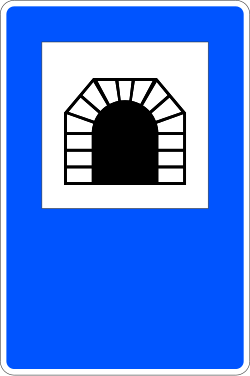
- Position light. It is switched on between sunset and sunrise, in tunnels, underpasses and sections with the tunnel sign (S-5), and when visibility drops a lot (fog, heavy rain, snowfall, smoke or dust).
- High beam. You must switch it on when you ride at more than 40 km/h, between sunset and sunrise, outside a built-up area and on an insufficiently lit road. Also at any time of day in an insufficiently lit tunnel or underpass, as long as you do not dazzle anyone. It can be used alone or together with the low beam. It is prohibited with the motorcycle stopped or parked.
- Insufficiently lit road: one on which, with normal eyesight, at some point of the roadway you cannot read a license plate at 10 meters or cannot distinguish a dark-painted vehicle at 50 meters.
- Glare. Switch from the high beam to the low beam as soon as you see that you could dazzle another user, above all one coming the other way (even if that user does not do the same), and do not switch it back until you have passed the point where you meet. The same precaution applies to the one ahead, who could be dazzled by their rearview mirror. If you are dazzled, reduce your speed as much as necessary, even stopping if needed, so as not to hit anyone.
- Front fog light. It is used in fog, heavy rain, snowfall, clouds of smoke or dust, and on narrow stretches of road with many curves (roadway of 6.50 meters or less with successive curves signs). It can be used alone, with the low beam or with the high beam.
- Rear fog light. Only in especially unfavorable conditions: dense fog, very heavy rain, heavy snowfall or dense clouds of dust or smoke.
Riding without lights when visibility is lacking or reduced, and dazzling others, are serious offenses.
Watch out in the exam: the motorcycle has the low beam always on, by day and by night, but not the high beam: that one is only used in the conditions above. And in a poorly lit tunnel, outside a built-up area, the answer is the high beam as long as you do not dazzle.
5. The rearview mirrors
The number of mirrors on the motorcycle depends on its maximum speed (General Vehicle Regulations, annex III). It applies to motorcycles with or without a sidecar and also to those that have a self-protection structure and seatbelts:
| Maximum speed of the motorcycle | Left mirror | Right mirror |
|---|---|---|
| 100 km/h or less | Mandatory | Optional |
| More than 100 km/h | Mandatory | Mandatory |
If the motorcycle has only one mirror, it goes on the left side. A scooter that by construction does not exceed 100 km/h may therefore be ridden with a single mirror, the left one. Motorcycle mirrors are class L, which is specific to mopeds and motorcycles.
Watch out in the exam: “a motorcycle of up to 100 km/h may go without a right mirror” is true; without a left mirror, never.
Even if the mirrors are well adjusted, there are always blind spots. If you look in the mirror to change lanes and you have doubts, also turn your head slightly before maneuvering. And remember that many motorcycle mirrors are slightly convex: the vehicles behind look smaller and seem farther away than they are (you saw this in Basic concepts).
If, in a built-up area, you are going to overtake on the right a passenger car that has no right rearview mirror, make sure beforehand that you can do so without danger to others.
6. The brakes
6.1 What the Regulations require
Every motorcycle must have two braking devices: one, at least, on the rear wheel and the other on the front wheel (General Vehicle Regulations, art. 12). If it has a sidecar, no brake is required on the sidecar wheel.
Some motorcycles have combined braking: one control that operates both brakes at once. Check in your motorcycle's manual how it distributes the force.
6.2 How braking is distributed
When you brake, the weight of the motorcycle shifts forward: the front wheel is loaded and the rear one is unloaded (figure 4). That is why:
- The front brake is the most effective: it stops the motorcycle in a clearly shorter distance, and it is the one that wears the most.
- Braking is distributed, approximately, between 60 and 70% on the front wheel and between 30 and 40% on the rear. If you are asked for a single figure, it is 70 and 30%.
- If you brake hard, the front one is the one that works the hardest. It is always operated smoothly and progressively.

Figure 4. When braking, the weight goes to the front wheel; when accelerating, to the rear one.
The distribution changes with the situation:
- With a heavy pillion passenger, the rear wheel carries more load and is less likely to lock: you can use the rear brake with more force.
- On a slippery road surface, as a general rule you squeeze the front brake less and the rear a little more, so as not to lock the steered wheel.
- On a tight turn (for example, at 30 km/h), squeezing the front brake hard can lock the front wheel and cause a fall.
- If you push the motorcycle with the engine stopped and turn, do not squeeze the front brake abruptly: the motorcycle loses its balance and could fall.
- With tires in good condition and a dry roadway in good condition, those conditions help keep the stopping distance from increasing. With a wet roadway it does increase. If you have gone through a puddle, the brakes get wet and lose effectiveness: brake lightly and several times in a row, right after going through it, to dry them. The same applies if the motorcycle has been outdoors for several days in damp weather: before setting off, expect that the brakes could fail to respond well.
6.3 Types of brake and their maintenance
- Disc brake. It is the most common on the front wheel: it brakes uniformly and powerfully and dissipates heat better. Many motorcycles have a disc on both wheels. Maintenance: replace the pads when they are worn.
- Drum brake. Maintenance: replace the shoes if they are worn and clean them if needed.
- Hydraulic system. Maintenance, among other things: check the brake fluid level.
The rest of the brake maintenance is in Motorcycle mechanics and operation.
Fading. It is the loss of effectiveness of the brakes due to overheating. It appears when going down long, steep slopes and when braking continuously in a short time. Disc brakes, which dissipate heat better, are less prone to it. To avoid it on a long descent, brake with the engine (using a lower gear) and use the service brake only when needed.
ABS. It is a system that, in hard braking, prevents the wheels from locking and reduces the risk of a fall for that reason.
Engine braking. You can brake with the engine: that is what you do when you shift down. On a curve, brake first and then shift down the gears needed.
7. The tires
Tires are the only thing that connects the motorcycle to the ground. They are an active safety element.
- The drive wheel is normally the rear one: it is the one that receives the engine's power. That is why, as a general rule, the rear tire wears more than the front one.
- The tread pattern on the tread clears the water and provides grip: a tire with tread is safer than a smooth one. What the General Vehicle Regulations require in order to ride is that the tire has tread in the main grooves (art. 12) and shows no damage or deformation: blisters, tears, cracks, exposed cords or signs that a layer is separating (annex VII).
- The minimum depth. Annex VII of the General Vehicle Regulations sets 1.6 mm of tread only for passenger cars, vans and trailers of up to 3,500 kg (categories M1, N1, O1 and O2) and 1.0 mm for buses, trucks and heavy trailers. It gives no figure for motorcycles. That is why the exam accepts the answer “there is no minimum depth” for the main grooves of a motorcycle. In practice, the tire wear indicators are a technical guide, not a legal limit: replace the tire when they are reached or before, because a worn tire loses grip and increases the risk of aquaplaning.
- When you replace them, their design and characteristics affect safety and riding technique. Fit them in their direction of rotation, the one marked by the arrow on the sidewall. If you fit them the wrong way round, the tread does not clear the water well and the layers of the tread could separate.
Inflation pressure is checked with the tires cold, after only a few kilometers. If you adjust it when hot, the air is expanded and the reading is higher: when you lower it to the manufacturer's figure, the real pressure will end up lower than the one indicated.
| Pressure | Consequence |
|---|---|
| Higher than necessary | The contact area with the ground and the grip decrease, and the suspension components suffer more fatigue and wear. Both are true. |
| Lower than necessary | Fuel consumption increases and the tires deform. |
| Long trip with a passenger and maximum luggage | It is advisable to raise it, according to the maintenance manual of the motorcycle. |
Watch out in the exam: the figure of 1.6 mm is that of passenger cars, not of the motorcycle. For the motorcycle, the exam's answer is that there is no fixed minimum depth.
8. Suspension and steering
The suspension system ensures uniform contact with the ground, prevents abrupt movements and gives comfort to the rider and, where applicable, the passenger. The front suspension has the telescopic fork; the rear one, one or two shock absorbers.
- If the front damping system is in poor condition, it affects the control of the motorcycle.
- If the rear suspension fails, the contact of the rear wheel with the roadway could be inadequate.
- The steering stem is the part of the steering where the bearings go. If you notice play in the steering, it is those bearings that you have to check.
Shock absorbers, suspension and steering are active safety elements.
9. From the engine to the wheel: what is asked here
The transmission carries the movement and power of the engine to the rear wheel, which is the drive wheel. Depending on the model, the final drive is by chain, belt or driveshaft; in all three cases the power reaches the rear wheel (the driveshaft transmits the engine's power to the drive wheel). The chain is lubricated with thick grease or a specific spray: a very thin oil would be flung toward the wheel and would dirty the tire. The detail of each one, and that of the engine, is in Motorcycle mechanics and operation.
Other loose questions on this part of the motorcycle:
- Engine cooled by air only: keep the outer fins of the engine clean, since they are what dissipate the heat.
- Magneto ignition: it does not need a battery, so there is no battery maintenance.
- Silencer. It is prohibited to ride with an open exhaust or with an incomplete, unsuitable or deteriorated silencer, on both urban and interurban roads. If yours breaks and makes annoying noises, you must not ride on any type of road (General Traffic Regulations, art. 7).
- Electromagnetic disturbances. A motorcycle with an internal combustion engine produces them: the spark of the spark plugs. The Regulations do not prohibit generating them; what they prohibit is exceeding the limits set (General Traffic Regulations, art. 7).
10. The equipment of the motorcycle
What you have to carry with you is in annex XII of the General Vehicle Regulations, and for the motorcycle it is very little:
- One high-visibility reflective vest, from 1 October 2026. You put it on when you get off the motorcycle if you occupy the roadway or the shoulder of an interurban road. If you ride professionally, you wear it on any road.
- There is no obligation to carry a hazard warning device: neither the V-16 warning light nor triangles. The connected V-16 is mandatory on passenger cars, not on motorcycles.
- The set of spare bulbs, the tools to change them and the spare wheel are not mandatory, even if you have wheels of different dimensions at the front and rear.
Watch out in the exam: older manuals and tests say that you must carry spare bulbs and tools. Today it is not mandatory: the mandatory equipment of the motorcycle is the vest.
The helmet, gloves and footwear are personal protective equipment and are covered in Motorcycle rider clothing.
11. Active safety and passive safety
- Active safety: what prevents the accident. It consists of the lighting, the tires, the brakes, the suspension and the shock absorbers, and the steering.
- Passive safety: what reduces the damage if the accident has already happened. The helmet, the leather suit and the rest of the clothing are passive.
12. Before setting off
It is not a rule, it is advice: spending a minute looking over the motorcycle prevents most failures.
| What | What you check |
|---|---|
| Tires | Pressure when cold, tread, no cuts or deformations. |
| Brakes | That the lever and the pedal respond firmly, the fluid level and the condition of the pads or shoes. |
| Lights and horn | Low beam, high beam, position, indicators and horn. The brake light, with each of the two brakes. |
| Mirrors | Well adjusted for you. |
| Chain | Lubricated and with the correct tension. |
| Steering | No play when turning the handlebars. |
| Fuel and oil | Sufficient level. |
If you have had a fall with no injuries, check the condition of the motorcycle before continuing.
13. How the motorcycle responds: weight, road surface and weather
Many questions in this topic are about riding: they depend on the condition of the motorcycle, the distribution of weight and grip. Here are the answers the exam gives; the detail is in the riding topics.
Weight.
- When accelerating, the mass of the motorcycle shifts toward the rear wheel. Excessive acceleration can make the rear wheel lose grip.
- A pillion passenger changes the center of gravity of the motorcycle. Side panniers are loaded with approximately the same weight on both sides. Not overloading saves fuel.
- At 10 km/h you provide the balance with quick, short movements of the handlebars and body; at 15 km/h the gyroscopic effect still has little influence and you are still the one who keeps the balance.
The curve and the road surface.
- Before a curve, brake first and shift down afterward. If you enter too fast, stop accelerating and do not brake hard.
- A pothole you cannot avoid: reduce your speed and go over it as straight as possible, with the motorcycle upright and the wheel forming as close to a right angle with the pothole as possible.
- Rails: cross them forming with them an angle as close to a right angle as possible.
- A patch of oil: brake before you reach it and go over it at reduced speed.
- Painted road markings (a transverse line, a pedestrian crossing): reduce your speed before going over them and, if you can, avoid riding on the paint, which is slippery.
- Fallen leaves: they reduce grip and can hide the road markings.
- Road surface in poor condition: increase the safety distance from the vehicle ahead.
The weather.
- Rain. A wet roadway increases the braking distance. Rain is more dangerous when it begins to rain. In heavy rain there is a risk of aquaplaning, above all at high speed: slow down and, if necessary, stop the motorcycle.
- Ice. The braking distance can increase up to ten times compared with normal. On ice or snow, ride in the highest possible gear; uphill in snow, the highest one you can reasonably use and without changing gears.
- Fog. It reduces visibility and the grip of the tires (fog dampens the asphalt). Use the front fog light, if the motorcycle has one. The rear one, only if the fog is dense: in light fog it dazzles the one behind.
- Wind. Crosswind and, above all, gusts are more dangerous.
- At night visual acuity is reduced.
Always: constantly observe what is happening on the road.
Overtaking. When you ride a motorcycle and overtake any other vehicle outside a built-up area (a passenger car, a truck, also on a motorway), you leave a lateral distance of at least 1.50 meters (General Traffic Regulations, art. 85.5). It is the rule for the motorcycle as a two-wheeled vehicle; the one for overtaking a motorcycle is in Riding in normal conditions.
What has changed in the rules
- 1 October 2026 (Royal Decree 518/2026). The high-visibility reflective vest becomes mandatory equipment of the motorcycle (annex XII of the General Vehicle Regulations), and the rider puts it on when getting off on the roadway or shoulder of an interurban road. Before, annex XII had no section for the motorcycle.
- 1 January 2026 (Royal Decree 159/2021). On passenger cars, triangles are no longer valid and the hazard warning is the connected V-16. The motorcycle is still not required to carry a hazard warning device.
- 30 May 2026 (Order PJC/528/2026). The General Vehicle Regulations have since set 1.0 mm of tread for buses, trucks and heavy trailers, which previously had no figure. The 1.6 mm for passenger cars, vans and trailers of up to 3,500 kg already existed and does not change. Motorcycles are in neither category: there is no figure for them.
- The oldest questions that treat the set of spare bulbs and the tools to change them as mandatory predate the current equipment.
Numbers you need to know
| What | Figure | Nuance |
|---|---|---|
| Mirrors of the motorcycle | Left mandatory; right only if it exceeds 100 km/h | A single mirror, the left one. |
| Low beam | Always on | Also by day. |
| High beam | More than 40 km/h | Outside a built-up area, at night, insufficiently lit road; tunnels, at any time. |
| Insufficiently lit road | 10 m (license plate) or 50 m (dark vehicle) | If you cannot read it or cannot distinguish it. |
| Front fog light on curves | Roadway of 6.50 m or less | With successive curves signs. |
| Braking distribution | 60–70% at the front, 30–40% at the rear | Approximate. |
| Braking distance on ice | Up to 10 times the normal | |
| Speedometer | Mandatory if it exceeds 40 km/h | |
| License plate of the motorcycle | 1, at the rear, vertical or almost vertical | A passenger car carries 2. |
| Lateral distance when overtaking (the motorcycle, outside a built-up area) | 1.50 m | |
| Mandatory equipment of the motorcycle | Vest | Since 1 October 2026. No V-16, spares or tools. |
| Minimum tread depth | 1.6 mm only on passenger cars, vans and trailers of up to 3,500 kg | For the motorcycle, annex VII sets no figure. |
Summary
- The front brake is operated with the right hand; the rear one, with the right foot. The clutch, with the left hand; the gears, with the left foot. The throttle is the right grip.
- The motorcycle has the low beam always on, also by day. The high beam is mandatory outside a built-up area, at night, on poorly lit roads and at more than 40 km/h, and at any time in poorly lit tunnels, always without dazzling.
- The low beam, high beam, position light, brake light and plate light, and the rear reflector, are mandatory. The fog lights and the hazard lights are optional; the reversing light is not a motorcycle light.
- The motorcycle has a single plate, at the rear and vertical.
- Up to 100 km/h, the left mirror is mandatory and the right one optional; above that, both.
- There are always blind spots: turn your head slightly before changing lanes.
- Every motorcycle has two independent brakes (front and rear wheel); the front one is the most effective and takes between 60 and 70% of the braking.
- Tire pressure is checked when cold. The General Vehicle Regulations require tires with tread in the main grooves and without damage, but set no minimum tread depth for the motorcycle; the 1.6 mm is for passenger cars.
- The drive wheel is the rear one and its tire wears more.
- It is prohibited to ride with an open exhaust or with a faulty silencer, on any road.
- The mandatory equipment of the motorcycle is the vest (since 1 October 2026): no V-16, triangles, spare bulbs or tools.
- Brakes, tires, suspension and shock absorbers are active safety; the leather suit is passive.
Check your understanding
1. Your motorcycle cannot exceed 90 km/h by construction. How many mirrors must you have?
Answer
One, the left one. The right one is optional, because it is only mandatory if the motorcycle exceeds 100 km/h.
2. Which control is operated with the right hand and which with the left?
Answer
With the right, the throttle (the grip) and the front brake. With the left, the clutch and, in addition, the horn, the lights and the indicators.
3. It is midday, it is sunny and you are riding on a road. Which light do you have on?
Answer
The low beam. The motorcycle has it always on, also by day and on any road.
4. Which wheel brakes more and how is the braking distributed?
Answer
The front one: between 60 and 70% of the braking on the front wheel and between 30 and 40% on the rear one, because the weight shifts forward when you brake.
5. What mandatory equipment must your motorcycle carry?
Answer
A high-visibility reflective vest (since 1 October 2026). It is not mandatory to carry a V-16, triangles, spare bulbs or tools.
6. You are going to adjust the tire pressure. When do you measure it and what happens if you do it when hot?
Answer
With the tires cold. If you adjust them when hot, the air is expanded and the reading is higher: when you leave them at the manufacturer's figure, the real pressure will be lower.
Do you know it already?